In a diverse country like India, road travel is the ideal way to rejuvenate the mind, health and thought process. Indian Roadie is an ode, a celebration to our romantic country, India. Indian Roadie is for all car, bike and road travel enthusiasts. There's a lot to learn from every km of Indian roads. Indian Roadie is an initiative by Marketingpundit.com (the virtual space identity of Deep Banerjee).
Tuesday, 30 August 2022
Why is the odometer reading in my VW Vento TDi blinking
Aquaplaning can be fatal
Monday, 29 August 2022
Route update about Pune - Nagpur in August 2022
Route update about Pune - Nagpur in August 2022:
Pune-Ahmadnagar: Road is good with patchworks.
Ahmednagar-Aurangabad: Few potholes and lots of two wheeler enroute. Average road conditions.
Aurangabad-Jalna: Fantastic smooth road. Again lots of 2 wheelers on route. Less traffic.
Crossed Aurangabad through city and avoided bypass due to bad experience last time.
Jalna-Shegaon: Awesome cement road ,few diversions and very less traffic. Dhaba 's available near chikhli who serves good food.
Shegaon-Akot: Again the roads are good with few bridges work is going on.
Akot-Amravati via Daryapur: Very good tar road with no potholes but expect few speedbreakers and cattles.
Amravati-Nagpur (Expressway): Best part of roads of this overall journey. Excellent conditions.
Overall journey was smooth and comfortable.
Note: Enquired to local person at Jalna about Mehkar route and he told me that Mehakar-Karanja route is damaged due to recent rains so took Chikhli route and I dont regret that decision.
Courtesy: A Ingle
Friday, 26 August 2022
4 laning of Gomati Chauraha–Udaipur section of NH8 is complete
Thursday, 25 August 2022
Maruti Eeco and passenger bus crashed in Kaithal, Haryana
Monday, 22 August 2022
Subhodev and Saptarshi ranked 1st in explorer category in Malwa Rally 2022
Sunday, 21 August 2022
Car and truck crash at Ranjangaon, MH on 2022-08-17
Shyok River overflowed onto the road on 2022-08-15
Monday, 8 August 2022
This is Deep Banerjee, ex- Castrol & Founder - #IndianRoadie + Marketingpundit.
I am an independent Corporate Brand Marketing Strategist and B-school visiting faculty throughout India.
I am also a brand marketing advisor to a couple of Indian Oil retail outlets to:
- create customer delight and
- increase footfalls/ drive-in.
#IndianRoadieEGranth (monthly eBook) is my most recent pathbreaking initiative w.e.f April 2022. The #eGranth reaches out to over 70,000 high networth professionals and businessmen across India. One A-site 24x7 fuel retail outlet already features in it and has started reaping the benefits.
Ask for no obligation FREE copies of the astounding eBook.
This is an invitation to filling station retail outlet owners to revert to me on 824***93** (Email: roadieindian@gmail.com) to feature in Indian Roadie eGranth every month for an image makeover. With every passing day fuel retailing in India will become a different ballgame altogether.
Waiting for you to respond.
Kolkata to Siliguri in Skoda Kushaq on 2022-08-07
Bangalore to Ellora - Indian Roadie Preferred Route/ Motoring Route
Distance: 950 kms.
Expected time: 15 - 16 hrs.
Sunday, 7 August 2022
Monsoon drive to Rajarappa in August 2022
There's also a Sun God (Suryadeb) temple with idol of the sun god riding his chariot drawn by 8 powerful horses on the banks of the confluence of Damodar and Bhairavi. This is adjacent to the Chinnamasta Temple.
Photo and content credit: Gautam Mullick.
Thursday, 4 August 2022
Jed Regan's shower build with a composting toilet within a tight space
Monday, 25 July 2022
Technical information of Air Filters
The huge volume of air sucked in by a family sedan car to burn just a liter of fuel can be upwards of 2000 liters. It's only an example to make roadies aware of what goes on while your car runs. This huge volume of air is a big threat to the engine life of cars. The threats are dust, industrial fume, exhaust gases and other particles. Cleaning the air from dust particles and harmful impurities is very important for preventing the wear in the cylinders and prolonging the life of the engine.
Experts say that in order to make a diesel engine go out of operating state, just 1 gm of dust is enough. We can safely conclude that the most critical filter for a diesel engine is the air filter. In industrial zones and mining/ construction sites, the amount of dust in the air is much over 0.1 grams per cubic mtr.
Under these conditions, a motor of 100 HP, approximately sucks 85 kg of dust in a working period of 2000 hours. As this amount increase more in the construction sites depending on weather conditions and working environments, straining and filtering used in motors is obviously very important. A clogged air filter worsens the working parameters of the motor, increases fuel cost, increase the amount of exhausted gases and all these are harmful for the environment. Test results with filters having different efficiencies under conditions with high amounts of dust (200 kg/m3) are given below.


| Filter no | Efficiency | Dust amount falling on the motor (g/h) |
1 | %99,0 | 2.0 |
| 2 | %99,5 | 1.0 |
| 3 | %99,6 | 0.8 |
| 4 | %99,7 | 0.6 |
| 5 | %99,8 | 0.4 |
| 6 | %99,9 | 0.2 |
A filter with filtration effect of 99,0% passes twice more dust to the motor when compared to a filter with filtration effect of 99,5%, and when it is compared to a filter with filtration effect of 99,9%, it passes 10 times more dust. Filters are divided in to four groups as grade AA (99%), grade A (98%), grade BB (96%) and grade B (93%) according to their dust collection capacities.The road a vehicle on which a low efficiency filter is mounted will cover until the main maintenance is between 300-500 km. However this vehicle can cover 3-4 times more distance with the use of a good filter. An appropriate filter choise will also affect the wear in the motor, working parameters and cost of use.
The quality of air filters can also be determined by looking at its facing. In a good filter, the papers are placed quite properly. Pleating and placing of filter papers in a well arranged way ensures equal passing of air through all surfaces and hence increase the period of use. When the joints of paper are open, the filter is clogged with air very quickly and when it is too dense, it does not let the air pass through it. Also filters in which placements are not well arranged and equal break down more quickly and need to be replaced. In order to avoid all these situations paper should properly ve pleated and ideal number of papers needed to be placed in the filter. Also properties like type and size of the paper used, pore dimension, size and form of fibres, paper thickness, string and mechanical strength are among factors that affect the quality of the filter.
According to TS 932, there are 5 different types of air filter:
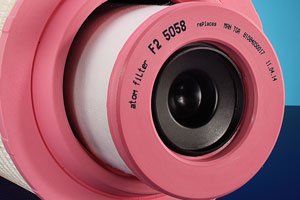
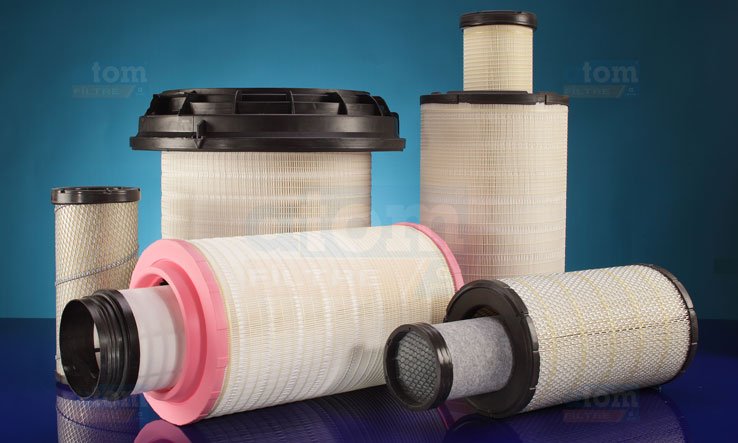
1-Dry-type Air Filter: The filter elements which carry out the straining process are composed of elements like wire mesh screen, wire wool, grain, felt, glasswool, fabric and paper. In some machines, filters with two engaged paper elements are used. This type of filters can strain 99,9% of the dust in the air. With the direction of the instructions of the producer firm of the machine, the maintenance of the filters should be made and the dust bowl should be cleaned time to time. The connections that necessitate impermeability should be checked, when the working conditions and filter indicator (dust indicator) indicate a clogging, the outer element should be cleaned with 5-6 bar pressurized air. The motor should be remounted after it is cleaned with pressurized air by applying air from inside to outside and after it is checked if there are any holes or tears in the element. In order to achieve this, a lamp with high brightness should be placed in the inner part of the filter. If there are any holes in the filter, light will pass through these holes. Such a filter should not be mounted on the motor. If no damage is detected, this filter can be used for a longer time. But it is not recommended to clean a filter with pressurized air more than three times. It should be also checked if the filter seal functions or not. The element inside is not cleaned, it is replaced with the outer element. When it is necessary, the filter element can be used after it is washed with water and dried. The dry-type air filter elements are 6 types as Type A, Type B, Type C, Type D, Type P and Type R according to their design and connection style.
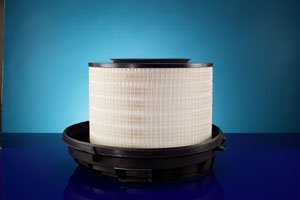
2-Oil-bath Air Filter: The air sucked by the motor, after passing through the pipe in the filter, brushes the oil in the filter vessel and the foreign matters in it are held by the oil. Also it drags some oil as grains with itself. The wire mesh screen at the outlet of the filter holds this oil and prevents it to go into the motor, also the dust particles in this air are held by this wire mesh screen and separated from the air. The cleaned air passes through the inlet manifold and goes to the cylinder. The oil which contains the dust particles held by the wire mesh screen is filtered and goes back to dust collecting ail pot. For this type of filters to filter well, the oil in the pot should regularly replaced and should be filled according to its level. The size of the oil vessel is related to size of the motor. The maintenance of these filters are more difficult. The oil should be drained when the mud sediment in the oil vessel reaches a height of 1-2 cm, the oil vessel and wire mesh screen should be washed with diesel fuel and oil having the quality and viscosity which the motor uses should be added upto the level line. Worked and rested motor oil can be added too. Wire mesh screen whose wires are disconnected and teared apart should definitely be replaced. For the maintenance of the filter, actions should be taken according to the instructions of manufacturing or operating firm by also considering the working conditions. The oil-bath air filters are divided into 3 type according to the position of air outlet as:
-Air outlet from bottom (T1)
-Air outlet from top (T2)
-Air outlet from the sides (T3 and T3A)
3- Filled Air Filter: It functions by filtering the air by means of oiled filling materials.
4-Mixed Air Filter: By combining two or more dry cyclone and oil-bath air filters appropriately, it ensures the particles in the air to be separated.
5- Cyclone Air Filter: It enables dust in air to be separated from the air by rotational motion and to precipitate and it is functionally an auxiliary pre-filter for the main filter which is used before dry or oil-bath air filters.
6-Air Filter with Muffler: It is an air filter which attenuates the noise which the air entering the filter creates with the help sound attenuator equipment with special form and dimension which is placed to the inlet part of the filter.
-Expectations from a good air filter:
-It should be able to hold particles with undesired diameter which go to the combustion chamber of the motor and which are directly related to motor characteristics.
-The resistance of the filter for the air flow and the increase of the resistance as a result of contamination should be as low as possible.
-The flow in the air flow line should be eased.
-Mounting, demounting and maintenance should be easy.
-It should work with the desired efficiency even in extremely dusty and moist environments.
-As sound waves are also created during the air inlet, air filter should also function as an inlet filter.
-The filter paper should be pressure resistant.
-In order to increase the resistance of the filter and to prevent the filter paper to go to the motor, galvanized perforated coverings made of sheet metal should be placed to the inner and outer surfaces of the filter element.
After working some time, dust is accumulated on the surface of the air filter and this causes a degree of clogging. This particular amount of clogging causes a pressure difference, and this affects the output power of the motor. The lifetime of the filter increases or decreases depending on the working environment (dust and relative humidity percentage in the air), the diameter of the particle to be held (dust, coal, soil, etc.), and the air flow rate (required air volume in unit time).
Filters should be replaced more often in places with high amount of dust. In some vehicles, there exists a sensor which indicates the dustiness degree of the air filter and when it is necessary to replace the filter.
A simple filter has a structure sealed from top and botton parts and placed in a metal container which forms the shank. In some type of filters, in order to increase the resistance of filter element, galvanized plates made of perforated sheet metal and supporting rods are added. This plates are used both for increasing the strength of the filter and for removing the large particles that might enter the filter paper from outside.
In some load trucks and buses, instead of a single filter, two filters are used and one of these is placed in the other. The filter inside is called protective filter. When the filter is extremely polluted, the absorbing power of the motor is enough the tear up the filter. When the main filter is teared, the protective filter protects the motor from dust and dirt and ensures reaching to the nearest service where a new main filter can be mounted. The efficiency of the protective filter is approximately 70%. The protective filter should be replaced after the main filter is replaced three times.
For some type of vehicles, propeller air filters are used. The props ensure the preliminary treatment of the air. They also help for the air inlet circulation to be more balanced and decreasing the sound caused by the air flow. In these systems, the air flow absorbed by the motor are rotated by the props and with the effect of centrifugal force, big sized dirt are collected in special collection place with the help of internal walls. These type of filters are used in equipment and machines which are used under conditions in which the air is extremely polluted (in mines, agriculture, construction).
Impermeability is important for ensuring the whole air flow to pass through the filter. In PUR and PCV sealed air filter elements the seal part will provide the impermeability at positions whre the filter is mounted on the motor. The seal part of these filters should be in solid and homogeneous structure in which the air gap is minimized. Also in these types of air filters, the sheet weldings on which the complete air filters are mounted should be at sufficient level in terms of permeability.
Source: AFM Filtration, manufacturers of Atom brand of filters
Technical Information of Fuel Filters
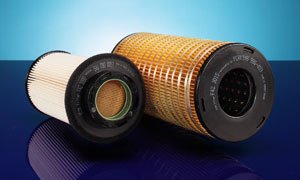
To minimize possibilities of clogging and damage in the fuel system, the fuel should be filtered very well. Bad filtration results in problems like increase in fuel consumption, decrease in the engine performance, malfunctions in the operation of engine and reduction in the lifetime of engine. Fuel filters ensure cleaning of fuel from solid particles which are very dangerous for fuel systems and the engine.
Injection motors, fuel pumps, carburetors are very sensitive to foreign particles in fuel. In one liter of fuel, there can be foreign particles of upto 1 mm at most. The filters mounted on the fuel system of automobiles should be in such a way to increase the efficiency of the engine and to prolong the lifetime of parts of the motor. The fuel filter not only prevents solid particles from getting into the system, it also stops water, paraffin and organic material residues (bacteria living in water mixed with fuel), too.
The efficiency of a fuel filter depends on the quality of the fuel used and the general condition (abrasion) of the engine. Fuel filters in carburetor engines can clean the particle upto 8 micrometers with an efficiency of 99%. In injection motors, this ratio decrease uptı diameters of 2-3 mictometers.
The pore size of the paper used in fuel filters is smaller than that of other filters. The reason for this is higher fuel viscosity and need of very good filtration of the fuel. If the pore size of the paper is larger than required, very small grained foreign particles will not ve filtered and this will cause clogging in the fuel system or some other damages.
The filtration element should have the filtration area sufficient to answer the need of the motor. This is ensured by considering the motor specific values during the design of filter element. Depending on the motor it is used, again in some fuel filters, there is a drain plug for the mounting of dirtiness sensor and water drainage. In fuel filters, by-pass systems and return systems are not used because they are not needed.
Substantial cleaning of the fuel and prolonging the filter lifetime can be achieved by means of multi-stage filters. In fuel systems, as the whole fuel going to the cylinders passes through the filters, it is cleaned. Oil coming from the fuel tank of the motor passes through at least one filter and sometimes, the number of filters can increase to three.
The fuel in the refinery gets dirty during fuelling, fuel dumping and transport. In order to increase the efficiency of the motor and to ensure operation at desired power, filtration of fuel is very important. In cases where the filter is not replaced for a long time, the fuel will not be strained enough and sufficient amount of fuel will not enter the motor. This is the main reason of pinking in the motor.

Filters are divided to the following subgroups:
Auxiliary filters: These filters are generally like a screen. Their function is separating large and solid particles, mixed dirt, organic waste and water from the fuel.
Prefilters: The portion of filtration is specially developed and made of unwoven material (tissue), they ensure cleaning of medium scale solid particles.
Water separators: They can be separate elements of fuel systems or can be placed in filter. Separation of water from the fuel is made by chemical reaction of sedimentation.
Auxiliary filters: Their volumes are generally larger and their surfaces are made of paper. They guarantee a more effective filtration.
Fuel filters are divived into three groups according to their structure and cleaning method:
Linear filters: They are used in carburetor and injection cars. Outer coating is metal and inner filtration part is composed of paper pleats. The outer part of some others can be made of plastic. The characteristic of this type of filters is very large filtration surface and these are especially used in gasoline engines. In modern diesel engines, filters whose filtration parts are made of paper pleats resistant to high pressure are used. As their surface is much larger they ensure more effective filtration and even after long time of use, they keep their absorbtion capability.
Dismountable filters: They are mostly used in construction equipment. When the period of use is ended, the outer (metal) part is kept and the inner part can be replaced. The advantage of this kind filters is that they are quite cheap and easy to replace. But it should be remembered that during these replacements, there is risk of entering of dirt to the fuel system.
Filters that can be mounted by rotation: Their structure is similar to oil filters but these filters are fixed with spirals to minimize the mounting time. Used filters can be dismounted and new ones can immediately be mounted. This type of filters generally have a water separation camera, too.

Fuel filters are divided into three according to the place they are used:
Gasoline Filter: In this type of filters wire or paper filters are used. The wire filter is mounted on gasoline tank, gasoline pump and gasoline inlet of the carburetor. The paper filter is placed between gasoline pump and the carburetor. This kind of filters are used in gasoline injection systems, too.
Diesel fuel Filters: In diesel motors, cartridge type filters are used generally. In production of these filters; cotton yarn, low twisted cotton yarn, accordion shape pleated paper, cellulose disks, bags woven with wool yarn and dense knit filter bags are used. In order to clean the diesel fuel, a very good filter is placed to the inlet of the high pressure pump, first. Also it might be necessary to place filters between the tank and the machine or between the transmission pump and high pressure pump or in both positions.
Gas (LPG) Filter: It is a fuel filter started to be used with the increase of LPG vehicles in recent years.
We can divide filters into following subgroups according to elements used inside them:
Metal element filters
Paper fiber filters
Felt fiber filters
Drum type filters
Cloth fiber filters
Clay fiber filters
Cotton fiber filters
Filter Maintenance:
Suitable maintenance of filters in good time decreases the malfunctions of parts in the fuel system and ensures their long life. For all maintenance process, instructions of the machine producer firm should be followed. Cleanin process is made from the flug at the bottom of the filter vessel with desired periods. Filter element or elements are cleaned, replaced. Because of the excessive water in the system, in some cases nonmetal filter element swells and the filter does not let appropriate amount of oil pass, the motor thrust decreases. When this situation is realized, the element should be immediately replaced.
Source: AFM Filtration, manufacturers of Atom brand of filters
Technical information of Oil Filters
The prime duty of oils used in engines are:
-To ensure lubrication of the movable parts of the engine.
-To prevent friction losses and wear
-To prevent accumulation of carbon wastes
-To ensure cooling of the pistons
-To neutralize the combustion acids formed during the combustion and minimize the wear these acids cause.
Oil filter keep the contaminated oil and particles formed because of abrasion during the operation of the engine away from the engine and transmission. Carbon grains, dust and dirts can mix to oil during the operation of the motor. A portion of these foreign matters precipitates to the casing and are held by the oil strainer and cap magnet. Smaller grains are strained by the filter before they are mixed with oil and hence harm to the system is prevented. Oil filter, which is one of the most important parts of motor greasing system, is the place where the dispersing additives in motor oil accumulates the corrosive and harmful matters in the motor out of the casing. Oil filter is present in all internal combustion engines. Both for life time of the motor and the filter, care must be given to use appropriate oil for the motor and appropriate filter for this oil. Also oil temperature is very important for an effective filtering.

The main reasons of contamination:
-Solid particles reaching to inside of the cylinder from air and fuel.
-Wastes that ar formed because of friction in rotating components.
-Water and carbon wastes that are formed during the burning of the fuel.
-Accumulations formed with burning and contamination of the oil.
Oil filters are important parts for the lifetime of the motor. Especially in high power and speed applications, for the motor to work efficiently, the oil in the system should circulate at the required speed and amount. The oil completing the circulation returns to the tank of the vehicle and is sent to the greasing channels again by a pump. When it comes to oil circulation, characteristics of the oil filter and the filtering element are very important. Elements in the oil filter are composed of special papers and has property to hold small particles. If the filtering element and its characteristics does not answer the oil need of the motor, there can be many problems about efficient working. If the pore size of the filtering element is larger than required, foreign particles in the oil can cause cloggings in the oil circulation system. In this case the motor is not greased enough and big breakdowns like gasket burn, bearing wrapping and crank cut can occur.
Also these particles which enter the motor without filtration can cause scratches on the motor shank. Again as the filter does not filter enough the motor oil will be contaminated before its acceptable lifetime, oil replacement will be needed while the filter is not contaminated yet and this will bring extra cost. If the pore size of the filtration element is smaller than required, the oil filter will be contaminated before its normal lifetime and it will be necessary to replace it. When the user does not realize this (because the filter will be contaminated before the oil change period of the vehicle), there can be some breakdowns in the motor. In addition to filter paper, some critical parts of the oil filters also play important roles in the filtering process. Return system ensures that oil always exists in filter in oil filter mounted to downwards. By means of this system, motor is not kept without oil during initial operation. Hence possible breakdowns are prevented. By-pass system is usually special to oil filters. When the filter paper is contaminated and clogged, oil cannot pass through filter paper and oil pressure in the filter increases. When the pressure reaches by-pass spring pressure it is opened and oil is sent to motor block. Here, the spring used in the system should be chosen correctly.
If a spring with low opening pressure is chosen, oil passes through the by-pass system without straining before the filter is clogged and can damage the engine. If a spring with high opening pressure is chosen, when the filter is clogged, the motor can be kept without oil until the inner pressure of the filter reaches to spring opening pressure and can be damaged. The only drawback in this system is the motor passing through the by-pass system is sent to the motor without filtration. In this case small particles can enter the motor and can cause extreme scrathing and abrasion. For this reason the oil filter should be replaced when the time comes. In maintenance instructions of vehicle producer firms, the replacement periods of filters are given. When a suitable filter is used for the engine, oil replacement and filter replacement become simultaneous. The general application in the market is this way. Also sheet metal elements of filter like busing, ring and cap should be suitable for the filter working conditions. For example the strength of sheet metal components to filter working pressure should at desired level. The surfaces of sheet metal components should be protected against corrosion and their interconnection should be made properly. The gaskets used in the filters are also important parts for impermeability. The gaskets should be resistant to pressure, temperature, vibration and characteristics of the straining material. Especially if upper gaskets are not compatible to the portion where the filter is connected to the motor, it causes oil loss in the system and this situation can cause important damages. Hence the inner structure and the dimensions of the gasket should be at desired values. The outer part of the filter where it is mounted on the motor (G) should be in accordance with the standards. Because of the vibration formed during the operation of the motor, the filter can loosen and as a result, impermeability problem can arise. This situation may cause undesired breakdowns. In order to prevent this, the thread size should be check during the production if it is at the measures defined in quality standards and the filter should be tested for vibration. Also in oil and hydraulic filters, inner sheaths can be used to increase corrosion resistance.
If appropriate filter and oil are used;
-A sufficient quality oil layer is formed in the cylinder liner. Hence abrasion of liner and piston rings is prevented.
-Formation of adhesive wastes in piston ring grooves is prevented.
-Bearing wear is decreased.
-Formation of adhesive wastes on cylinder surfaces and valves is prevented.
-All movable parts in the motor are cleaned.
-Re-entering of cast iron particles coming from piston, piston ring and grooves and particles of white metal, brass and bronze coming from gear, cam is prevented.

Filters can be dividen into two basic groups according to their oil cleaning methods:
-Barrier Type Filters: Strain type filter material is used and oil is cleaned by passing through the filer.
-Energic Filters: Contaminated particles and oil are cleaned with the help of gravitation and magnetic forces during motion.
The filters produced today show the characteristics of both types. Based on the structure of barrier type filters, we can divide them into three subgroups:
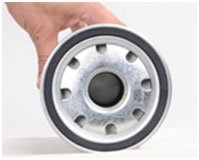
Filters that can be mounted by rotating: In this type of filters, metal components are more and they are produced as single-piece. The filter is in a body made of stainless steel. They are mounted on the motor with the help of a metric or whitworth fine threaded screw. When the lifetime of the filter is over or when the filter is clogged, it is dismounted and chucked out. This kind of filters have advantages like mechanical strength during use and easy replacement. While the motor oil is being replaced the filter should be dismounted, the gasket of the new filter should be greased first and should be mounted on the motor by rotating.
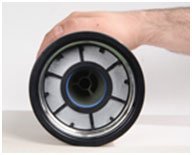
-Replaceable filters: In this kind of filters busing or mounting spot is ready on the motor and filter is mounted on this spot. Working principle is the same with atom filter and basically their functions are the same but in this type of filters elements can be replaced. Filters used for pre-cleaning of the oils and made of unwoven material or in other words, secondary filters are parts of greasing systems. Filters made of unwoven materials can clean much more material and particles compared to paper filters. This kind of filters are only chucked out when the element filter is clogged. But the excessive resistance they put up against air flow makes them impossible to use in internal combustion engines today.
Nowadays, both these two filters and some other tpe of filters are used. The type of filters to be used in the greasing system of the automobiles is determined during the production of the motor and can vary according to the type of the motor.
We can divide greasing systems into three groups according the position of filters in motor:
-Full flow systems: In this type of systems oil filter is directly connected to the motor. This way, whole oil in the motor passes through the filter. But in this situation, because of the resistance of the filter, the oil flow to the motor is limited and the oil pressure in the motor may decrease. Because of this valves are used in full flow systems. The function of the valve is to speed up the air flow to the motor. This valve may be in the oil filter or the motor.
-Partial flow systems: In this type of greasing systems oil filter is connected to the motor in parallel. This position of filter means that only 10% of the oil in the circulation passes through the filter. The remaining oil (nearly 90%) directly circulates in the motor and greases all systems. In this system cleaned air amount gradually decreases and the filter is clogged.
-Combined filtration systems: Two filters are present in this system and they function as described above. The oil coming from the oil pump passes through the first filter first and then it is divided into two. A large portion of the oil (nearly 90%) directly goes to the motor and the remaining oil (nearly 10%) goes to the second filter to get cleaned. Mounting of two filters to the greasing system increases the efficiency of the greasing and prolongs the lifetime of the filter.
Despite filters that are mounted by rotation look like eachother in appearance, their internal structures are quite different. In the greasing system of the motor, in order to guarantee efficient working of the filters, working parameters should be balanced very well. These parameters are effective cleaning, absorbtion capability, suitable resistance of oil flow, working pressure and structural characteristics of the filters (position on the motor, type of inner valves, sized of filters and gaskets).
According to the structure of greasing systems, three types of valves are used in filters that are mounted by rotation:
-Nippel valved: This valve is a round shaped rubber piece. It is mounted on the outer side of the filter and prevents return of the oil to the oil pump.
-Peripheral valved: This valve always stays in the filter and it is a part of oil supply system. It is used if there are no such valves on the motor. The main function of this valve is ensuring the continuity of oil circulation when the motor is working in cold condition or when the filter is clogged because of excessive use.
There are two types of peripheral valve in filters that are mounted by rotation. The peripheral at the bottom is mounted to the bottom of the filter while the peripheral valve on top is mounted on the top of the filter. Ensuring the circulation of oil over basic filters is amoung duties of peripheral valve. If the circulation is too fast, the accumulated dirty particles will mix to the oil again and contaminate it, and this will result in too quick abrasion of motor. In order to avoid these negative effects, the filter should be opened and cleaned more frequently. The upper valve prevents dirty particles to mix with clean oil. At the same time, if the valve is open, it ease the oil flow through the filter and shortens the way. This way, optimum protection is achieved for motor and dirty particles collected in the filter cannot return to clean oil.
Antisiphon valve: The main function of this valve is preventing the oil to return to the motor from the filter. If the antisiphon valve is mounted in the filter, dry and semi-dry friction of rotating parts of the motor is prevented. This occasion is called “dry operation” and causes the motor to be abraded very fast. The aim here is to minimize the abrasion. The antisiphon valve prevents the motor to be kept without oil while the filter is replaced. Both motor and the environment is protected from contaminated oils this way.
Source: AFM Filtration, manufacturers of Atom brand of filters
Thursday, 21 July 2022
Indian Roadie Blacklisted Hotel in Purulia
Google the name of the resort spread over sprawling undulated topography. It won't be difficult to guess the name. Google furthermore about everything that has happened between 2020 and 2022. All that glitters is not gold.
Spread the word around like wildfire.
.
.
.
* Indian Roadie Blacklisted Hotel in Purulia,
* Blacklisted Hotel